

Sri-Lanka Information
Culture of Sri Lanka | Map of Sri Lanka | Colombo | Sri Lanka Slide Show | Kandy | Nuwra Eliya | Anuradhpura | Basic Sinhala Phrases | Chronology of Events in Sri Lanka
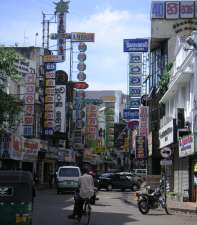 Sri Lanka, Ceylon or Shri-lanka is an island nation in South Asia,
located only 31 kilometers off the southern coast of India. Sri-lanka is
popularly referred to as the Pearl of the Indian Ocean, it is home to around
twenty million people.
Sri Lanka, Ceylon or Shri-lanka is an island nation in South Asia,
located only 31 kilometers off the southern coast of India. Sri-lanka is
popularly referred to as the Pearl of the Indian Ocean, it is home to around
twenty million people.
Due to its location in the path of major sea routes, Sri Lanka is a strategic naval link between Western Asia and South East Asia. Srilanka has always been a center of Buddhist religion and culture from ancient times. Today, the country is a multi-religious and multi-ethnic nation, with nearly a third of the population following faiths other than Buddhism, which include Hinduism, Christianity and Islam.
The Sinhalese community in Srilanka forms the majority of the population, with Tamils, who are concentrated in the north and east of the island, forming the largest ethnic minority. Other communities include the Muslim Moors and Malays and the Burghers.
Famous for the production and export of tea, coffee, rubber and coconuts, Sri Lanka boasts a progressive and modern industrial economy and the highest per capita income in South Asia. The natural beauty of Sri Lanka's tropical forests, beaches and landscape, as well as its rich cultural heritage, make it a world famous tourist destination.
After over two thousand years of rule by local kingdoms, parts of Sri Lanka were colonized by Portugal and the Netherlands beginning in the 16th century, before the control of the entire country was ceded to the British Empire in 1815. During World War II, Sri Lanka served as an important base for Allied forces in the fight against the Japanese Empire. A nationalist political movement arose in the country in the early 20th century with the aim of obtaining political independence, which was eventually granted by the British after peaceful negotiations in 1948.
History of Sri Lanka
Prehistory of Sri Lanka
 Paleolithic human settlements have been discovered at excavations in several
cave sites in the Western Plains region and the South-western face of the
Central Hills region. Anthropologists believe that some discovered burial rites
and certain decorative artifacts exhibit similarities between the first
inhabitants of the island and the early inhabitants of Southern India. Recent
bioanthropological studies have however dismissed these links, and have placed
the origin of the people to the northern parts of India.
Paleolithic human settlements have been discovered at excavations in several
cave sites in the Western Plains region and the South-western face of the
Central Hills region. Anthropologists believe that some discovered burial rites
and certain decorative artifacts exhibit similarities between the first
inhabitants of the island and the early inhabitants of Southern India. Recent
bioanthropological studies have however dismissed these links, and have placed
the origin of the people to the northern parts of India.
One of the first written references to the island is found in the Indian epic Ramayana, which described the emperor Ravana as monarch of the powerful kingdom of Lanka, which was created by the divine sculptor Vishwakarma for Kubera, the treasurer of the Gods. English historian James Emerson Tennent also theorized Galle, a southern city in Sri Lanka, was the ancient seaport of Tarshish from which King Solomon is said to have drawn ivory, peacocks and other valuables. The main written accounts of the country's history are the Buddhist chronicles of Mahavansa and Dipavamsa.
Early Sri Lankan History
The earliest-known inhabitants of the island now known as Sri Lanka were probably the ancestors of the Wanniyala-Aetto people, also known as Veddahs and numbering roughly 3,000. Linguistic analysis has found a correlation of the Sinhalese language with the languages of the Sindh and Gujarat, although most historians believe that the Sinhala community emerged well after the assimilation of various ethnic groups. From the ancient period date some remarkable archaeological sites including the ruins of Sigiriya, the so-called "Fortress in the Sky", and huge public works.
Among the latter are large "tanks" or reservoirs, important for conserving water in a climate that alternates rainy seasons with dry times, and elaborate aqueducts, some with a slope as finely calibrated as one inch to the mile. Ancient Sri Lanka was also the first in the world to have established a dedicated hospital in Mihintale in the 4th century BCE. Ancient Sri Lanka was also the world's leading exporter of cinnamon, which was exported to Egypt as early as 1400 BCE. Sri Lanka was also the first Asian nation to have a female ruler in Queen Anula (47?42 BC)
Kings of Sri Lanka
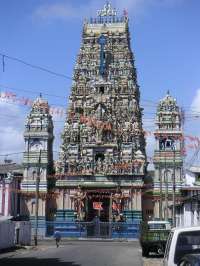 Since ancient times Sri Lanka was ruled by monarchs, most notably of the
Sinha royal dynasty that lasted over 2000 years. The island was also
infrequently invaded by South Indian kingdoms and parts of the island were ruled
intermittently by the Chola dynasty, the Pandya dynasty, the Chera dynasty and
the Pallava dynasty. The island was also invaded by the kingdoms of Kalinga
(modern Orissa) and those from the Malay Peninsula. Buddhism arrived from India
in the 3rd century BCE, brought by Bhikkhu Mahinda, who is believed to have been
the son of Mauryan emperor Ashoka. Mahinda's mission won over the Sinhalese
monarch Devanampiyatissa of Mihintale, who embraced the faith and propagated it
throughout the Sinhalese population. The Buddhist kingdoms of Sri Lanka would
maintain a large number of Buddhist schools and monasteries, and support the
propagation of Buddhism into Southeast Asia.
Since ancient times Sri Lanka was ruled by monarchs, most notably of the
Sinha royal dynasty that lasted over 2000 years. The island was also
infrequently invaded by South Indian kingdoms and parts of the island were ruled
intermittently by the Chola dynasty, the Pandya dynasty, the Chera dynasty and
the Pallava dynasty. The island was also invaded by the kingdoms of Kalinga
(modern Orissa) and those from the Malay Peninsula. Buddhism arrived from India
in the 3rd century BCE, brought by Bhikkhu Mahinda, who is believed to have been
the son of Mauryan emperor Ashoka. Mahinda's mission won over the Sinhalese
monarch Devanampiyatissa of Mihintale, who embraced the faith and propagated it
throughout the Sinhalese population. The Buddhist kingdoms of Sri Lanka would
maintain a large number of Buddhist schools and monasteries, and support the
propagation of Buddhism into Southeast Asia.
European occupation of Sri Lanka
Sri Lanka had always been an important port and trading post in the ancient world, and was increasingly frequented by merchant ships from the Middle East, Persia, Burma, Thailand, Malaysia, Indonesia and other parts of Southeast Asia. The islands were known to the first European explorers of South Asia and settled by many groups of Arab and Malay merchants. A Portuguese colonial mission arrived on the island in 1505 headed by the Louren? de Almeida the son of Francisco de Almeida. At that point the island consisted of three kingdoms, namely Kandy in the central hills, Kotte at the Western coast, and Yarlpanam (Anglicised Jaffna) in the north. The Dutch arrived in the 17th century. Although much of the island came under the domain of European powers, the interior, hilly region of the island remained independent, with its capital in Kandy. The British East India Company established control of the island in 1796, declaring it a crown colony in 1802, although the island would not be officially connected with British India. The fall of the kingdom of Kandy in 1815 unified the island under British rule.
Sri Lanka independence struggle
Sigiriya Rock Fortress. European colonists established a series of tea, cinnamon, rubber, sugar, coffee and indigo plantations. The British also brought a large number of indentured workers from Tamil Nadu to work in the plantation economy. The city of Colombo was established as the administrative centre, and the British established modern schools, colleges, roads and churches that brought Western-style education and culture to the native people. Increasing grievances over the denial of civil rights, mistreatment and abuse of natives by colonial authorities gave rise to a struggle for independence in the 1930s, when the Youth Leagues opposed the "Ministers' Memorandum," which asked the colonial authority to increase the powers of the board of ministers without granting popular representation or civil freedoms. During World War II, the island served as an important Allied military base. A large segment of the British and American fleet were deployed on the island, as were tens of thousands of soldiers committed to the war against Japan in Southeast Asia.
Independence of Sri Lanka
Following the war, popular pressure for independence intensified. On February 4, 1948 the country won its independence as the Commonwealth of Ceylon. Don Stephen Senanayake became the first Prime Minister of Sri Lanka. On July 21, 1960 Sirimavo Bandaranaike took office as prime minister, and became the first female head of government in post-colonial Asia and the first female prime minister in the world. In 1972, the country became a republic within the Commonwealth, and the name was changed to Sri Lanka. The island enjoyed good relations with the United Kingdom and had the British Royal Navy stationed at Trincomalee.
Since 1983, there has been on-and-off civil war, predominantly between the government and the Liberation Tigers of Tamil Eelam (LTTE, also known as the Tamil Tigers), a separatist militant organization who fight to create an independent state named Tamil Eelam in the North and East of the island.
Sri Lanka Flora and fauna
Mountain forests in Sri Lanka. Ecology of Sri Lanka
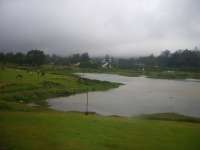 The mountains and the southwestern part of the country, known as
the "wet zone," receive ample rainfall (an annual average of 2500 millimetres).
Most of the southeast, east, and northern parts of the country comprise the "dry
zone," which receives between 1200 and 1900 mm (47?75 in) of rain annually. Much
of the rain in these areas falls from October to January; during the rest of the
year there is very little precipitation, and all living creatures must conserve
precious moisture.
The mountains and the southwestern part of the country, known as
the "wet zone," receive ample rainfall (an annual average of 2500 millimetres).
Most of the southeast, east, and northern parts of the country comprise the "dry
zone," which receives between 1200 and 1900 mm (47?75 in) of rain annually. Much
of the rain in these areas falls from October to January; during the rest of the
year there is very little precipitation, and all living creatures must conserve
precious moisture.
The arid northwest and southeast coasts receive the least amount of rain ? 600 to 1200 mm (24?47 in) per year ? However, though many say that there are no really dry areas in Sri Lanka, there are many pockets of very dry and abandoned areas where there is little to no rainwater. Varieties of flowering acacias are well adapted to the arid conditions and flourish on the Jaffna Peninsula. Among the trees of the dry-land forests are some valuable species, such as satinwood, ebony, ironwood, and mahogany and teak. In the wet zone, the dominant vegetation of the lowlands is a tropical evergreen forest, with tall trees, broad foliage, and a dense undergrowth of vines and creepers.
Subtropical evergreen forests resembling those of temperate climates flourish in the higher altitudes. Forests at one time covered nearly the entire island, but by the late 20th century lands classified as forests and forest reserves covered around one-third of the land. As the area covered by forests declined, thereby threatening various species of wildlife, Sri Lanka became the first country in the world to establish a wildlife sanctuary.
Among them, the Ruhunu National Park in the southeast protects herds of elephant, deer, and peacocks, and the Wilpattu National Park in the northwest preserves the habitats of many water birds, such as storks, pelicans, ibis, and spoonbills. During the Mahaweli Ganga Program of the 1970s and 1980s in northern Sri Lanka, the government set aside four areas of land totaling 1,900 km? (730 sq mi) as national parks. The island has three biosphere reserves, Hurulu, Sinharaja, and the Kanneliya-Dediyagala-Nakiyadeniya.
The national flower of Sri Lanka is Nil Manel (Nymphaea stelleta), the national tree is Na (Mesua nagassarium) and the national bird is the Sri Lanka Junglefowl, which is endemic to the country.