

Colombo
Colombo is the capital of Sri Lanka. It is the largest city of our small country. Colombo is where all colors of Sri lanka meet, it is the melting point of the culture of Sri Lanka. Colombo is truly an oriental city where you will find the authentic bazaars, small markets beautiful colonial architecture and most of all friendly folks of the city.
Colombo is connected via the Bandranaike International airport to all destinations of the world. Many International airlines fly regularly from most of the world. You can check the airfares to Colombo to check the best available flight for you.
Tours in Colombo
Colombo although comparatively a small city but needs about 2 days to explore. Travel & Culture offers the following tours in Colombo
Colombo City Tour
Half day tour of this beautiful city Tour will begin from the Fort area of Colombo which has been named fort because of it being a fort during the times of Portuguese and Dutch. Later visit the Colombo National Museum to see some of the great specimens of arts crafts and archeology of Colombo. Drive by the commercial areas and Pettah, a colorful Oriental bazaar with a mix of people, ancient vehicles, bargains, mosques and temples. Also visit Hindu Temple, Buddhist Temple and the Jumi Ul Alfar Jumma Mosque of Colombo. (Tour Lasts 4 hours) More details & booking visit Colombo City tour page
Colombo Full Day Guided Shopping Tour
Pick up from your hotel in the morning Visit the Barefoot, Paradise Road, Odel, Lakmedura & Premadasa Jewellers. Lunch at the Round Tour Restaurant, Afternoon return to your hotel Contact us to book this tour
Full Day Kandy Tour Visit the garden city of Kandy a full day Excursion to Kandy via Pinnawala Elephant orphanage.
Full Day Galle Tour from Colombo
Sri Lanka Hotair Balloon Safari Tour
2 Days Adams Peak Climbing tour from Colombo
The name Colombo, first introduced by the Portuguese in 1505, is believed to be derived from the classical Sinhalese name Kolon thota, meaning "port on the river Kelani". It has also been suggested that the name may be derived from the Sinhalese name "Kola Amba Thota" which means "harbor with leafy mango trees".
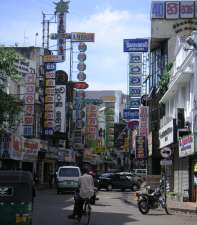 Due
to its large natural harbor and its strategic position along the East-West sea
trade routes, Colombo was known to ancient traders since more than 2,000 years
ago. However it was only made the capital of the island when Sri Lanka was ceded
to the British Empire in 1815, and its status as capital was retained when
the nation received independence in 1948. In 1978, when administrative functions
were moved to Sri Jayawardenepura Kotte, Colombo was designated as the
commercial capital of Sri Lanka.
Due
to its large natural harbor and its strategic position along the East-West sea
trade routes, Colombo was known to ancient traders since more than 2,000 years
ago. However it was only made the capital of the island when Sri Lanka was ceded
to the British Empire in 1815, and its status as capital was retained when
the nation received independence in 1948. In 1978, when administrative functions
were moved to Sri Jayawardenepura Kotte, Colombo was designated as the
commercial capital of Sri Lanka.
Like many cities, Colombo's urban area extends well beyond the boundaries of a single local authority, encompassing other Municipal and Urban Councils. The main city is home to a majority of the Sri Lanka's corporate offices, restaurants and entertainment venues. Famous landmarks in Colombo include the Galle Face Green, the Viharamahadevi Park as well as the National Museum
Colombo Hotels
Hotels in Colombo.shtml
History
As Colombo possesses a natural harbor, it was known to Romans, Arabs, and Chinese traders over 2,000 years ago. Traveler Ibn Batuta who visited the island in the 14th century, referred to it as Kalanpu. Arabian Muslims whose prime interests were trade, began to settle in Colombo around the 8th century CE mostly because the port helped their business and controlled much of the trade between the Sinhalese kingdoms and the outside world. They now comprise the local Sri Lankan Moor community.
The Portuguese Era
Explorers from Portugal led by Don Louren? de Almeida first arrived in Sri Lanka in 1505. During their visit they made a treaty with the King of Kotte Parakramabahu VIII (1484-1508) enabling them to trade in the islands' crop of cinnamon, which grows in Colombo & coastal areas of the island. As part of the treaty, the Portuguese were given full authority over the coast line in exchange for the promise of guarding the coast against invaders. They were also allowed to establish a trading post in Colombo. Within a short time, however, they then expelled the Muslim inhabitants of Colombo and began to build a fort there in 1517
The Portuguese soon realized that control of Sri Lanka was necessary for protection of their coastal establishments in India and they began to manipulate the rulers of the Kotte Kingdom in order to gain control of the area. After skillfully exploiting rivalries within the Royal Family, they took control of a large area of the Kingdom and the Sinhalese King Mayadunne established a new Kingdom at Sitavaka, a domain in the Kotte kingdom. Before long he annexed much of the Kotte kingdom and forced the Portuguese to retreat to Colombo, which was repeatedly besieged by Mayadunne and the later Kings of Sitawaka, forcing them to seek reinforcement from their major base in Goa, India. However, following the fall of the Kingdom in 1593, the Portuguese were able to establish complete control over the entire coastal area, with Colombo as their capital
This part of Colombo is still known as Fort and houses the presidential palace and the majority of Colombo's five star hotels. The area immediately outside Fort is known as Pettah "outer fort") and is a commercial hub.
The Dutch Era
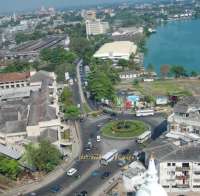 In
1638 the Dutch signed a treaty with King Rajasinha II of Kandy which assured the
king assistance in his war against the Portuguese in exchange for a monopoly of
the island's major trade goods. The Portuguese resisted the Dutch and the
Kandyans, but were gradually defeated in their strongholds beginning in
1639. They captured Colombo in 1656 after an epic siege, at the end of which
a mere 93 Portuguese survivors were given safe conduct out of the fort. Although
the Dutch initially restored the captured area back to the Sinhalese Kings, they
later refused to turn them over and gained control over the island's richest
cinnamon lands including Colombo which then served as the capital of the Dutch
maritime provinces under the control of the Dutch East India Company until 1796.
In
1638 the Dutch signed a treaty with King Rajasinha II of Kandy which assured the
king assistance in his war against the Portuguese in exchange for a monopoly of
the island's major trade goods. The Portuguese resisted the Dutch and the
Kandyans, but were gradually defeated in their strongholds beginning in
1639. They captured Colombo in 1656 after an epic siege, at the end of which
a mere 93 Portuguese survivors were given safe conduct out of the fort. Although
the Dutch initially restored the captured area back to the Sinhalese Kings, they
later refused to turn them over and gained control over the island's richest
cinnamon lands including Colombo which then served as the capital of the Dutch
maritime provinces under the control of the Dutch East India Company until 1796.
The British era
Although the British captured Colombo in 1796, it remained a British military outpost until the Kandyan Kingdom was ceded to them in 1815 and they made Colombo the capital of their newly created crown colony of Ceylon. Unlike the Portuguese and Dutch before them, whose primary use of Colombo was as a military fort, the British began constructing houses and other civilian structures around the fort, giving rise to the current City of Colombo
Initially, they placed the administration of the city under a "Collector", and John Macdowell of the Madras Service was the first to hold the office. Then, in 1833, the Government Agent of the Western Province was charged with the administration of the city. Centuries of colonial rule had meant a decline of indigenous administration of Colombo, and in 1865 the British conceived a Municipal Council as a means of training the local population in self-governance. The Legislative Council of Ceylon constituted the Colombo Municipal Council in 1865 and the Council met for the first time on the January 16, 1866. At the time, the population of the region was around 80,000.
During the time they were in control of the Colombo, the British were responsible for much of the planning of the present city. In some parts of the city tram car tracks and granite flooring laid during the era are still visible today
Post Independence
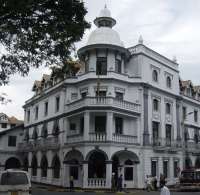 This
era of colonialism ended peacefully in 1948 when Ceylon gained independence from
Britain. Due to the tremendous impact this caused on the city's inhabitants
and on the country as a whole, the changes that resulted at the end of the
colonial period were drastic. An entire new culture took root. Changes in laws
and customs, clothing styles, religions and proper names were a significant
result of the colonial era. These cultural changes were followed by the
strengthening of the island's economy. Even today, the influence of the
Portuguese, the Dutch and the British is clearly visible in Colombo's
architecture, names, clothing, food, language and attitudes. Buildings from all
three eras stand in their glory as reminders of the turbulent past of Colombo.
The city and its people show an interesting mix of European clothing and
lifestyles together with local customs. Colombo is by far more modern than
most cities in neighboring countries and continues to be a blossoming metropolis
of the East.
This
era of colonialism ended peacefully in 1948 when Ceylon gained independence from
Britain. Due to the tremendous impact this caused on the city's inhabitants
and on the country as a whole, the changes that resulted at the end of the
colonial period were drastic. An entire new culture took root. Changes in laws
and customs, clothing styles, religions and proper names were a significant
result of the colonial era. These cultural changes were followed by the
strengthening of the island's economy. Even today, the influence of the
Portuguese, the Dutch and the British is clearly visible in Colombo's
architecture, names, clothing, food, language and attitudes. Buildings from all
three eras stand in their glory as reminders of the turbulent past of Colombo.
The city and its people show an interesting mix of European clothing and
lifestyles together with local customs. Colombo is by far more modern than
most cities in neighboring countries and continues to be a blossoming metropolis
of the East.
Historically, Colombo referred to the area around the Fort and Pettah Market which is famous for the variety of products available as well as the Khan Clock Tower, a local landmark. At present, it refers to the city limits of the Colombo Municipal Council. More often, the name is used for the Conurbation known as Greater Colombo, which encompasses several Municipal councils including Kotte, Dehiwela and Colombo.
Although Colombo lost its status as the capital of Sri Lanka in the 1980s, it continues to be the island's commercial center. Despite the official capital of Sri Lanka moving to the adjacent Sri Jayawardenepura Kotte, most countries still maintain their diplomatic missions in Colombo.
What to see in Colombo.
Like many capital cities in developing countries is fast changing its face. Yet in some parts, the old world charm is retained. for example, there is a 100-year-old clock tower here in colombo and several British built, colonial buildings too. Other places of interest are the Pettah bazaar where one can shop for bargains, residential areas where you find the stately homes of the affluent, the Bandaranaike memorial international conference hall an outright gift to Sri Lanka from the people's republic of china, the new parliament in Sri Jayawardenapura and the folk art centre. During your city tour with travel & Culture you will be visiting some of the famous shopping places where you can have a real value for your money. Visit the Majestic City shopping Complex, House of Fashion & ODEL dress boutiques. On completion return to the hotel. Contact us for a tour of Colombo
Landmarks of Colombo
The two World Trade Center towers use to be the most recognized landmarks of the city. Before these towers were completed in 1997, the adjacent Bank of Ceylon tower was the tallest structure and the most prominent landmark of the city. Before the skyscrapers were built it was the Old Parliament Building that stood majestically in the Fort district.
Even before the parliament was built some claim that the Jami Ul Alfar mosque was recognized as the landmark of Colombo by sailors approaching the port. The mosque is still one of the most visited tourist sites in Colombo.
The Fort district also has the famous Cargills & Millers complex that is protected by a special government law from demolition. This is done mainly to preserve the historic beauty of the Fort area.
The Galle Face Green is the city's largest and most elegant promenade. Lined with palm trees and adjacent to the coast, this mile-long stretch in the heart of the city is a constant beehive of activity. The green is especially busy on Fridays and Saturdays. In the evenings it plays host to families and children playing sports and flying kites, lovers embracing under umbrellas and health enthusiasts taking their daily evening walks.
There are numerous small food stalls and a small stretch of beach to get wet. The green was recently given a make over and since then has been even more popular with the local community. The Green also frequently hosts numerous international and local concerts and performances, such as the recently concluded World Drum Festival.
Cannons used during wartime in the colonial era are still laid out for observance and prestige at the Green, giving a colonial touch to the city. The famous colonial styled Galle Face Hotel, known as Asia's Emerald on the Green since 1864, is also adjacent to Galle Face Green. The Hotel has played host to distinguished guests including the British Royal Family and other Royal Guests and Celebrities. Apparently after having stayed at the hotel, Princess Alexandra of Denmark had commented that "the peacefulness and generosity encountered at the Galle Face Hotel cannot be matched". Around the corner from Galle Face are prominent coffee bars, chic bars and boutiques.
Culture in Colombo
Annual cultural events and fairs
Vesak Lanterns, A type of pooja (offering) known as Aloka pooja (offering of light). Followed by the Buddhists Colombo's most beautiful festival is the celebration of Buddha's Birth, Enlightenment and Death all falling on the same day. In Sinhala this is known as Vesak.
During this festival, much of the city is decorated with lanterns, lights and special displays of light (known as Thoran). The festival falls in mid May and lasts a week when many Sri Lankans visit the city to see the lantern competitions and decorations. During this week people distribute, rice, drinks and various other food items for free in places what is known as Dunsal which means charity place. These Dunsals are popular amongst visitors from the suburbs.
Christmas is another major festival in the city. Although Sri Lanka's Christians make up only just over 7% of the population, Christmas is one of the island's biggest festivals. Most streets and commercial buildings light up from the beginning of December and festive sales begin at all shopping centres and department stores. Caroling and nativity plays are also frequent sights during the season.
Performing arts
Colombo has several performing arts centers which are popular for their musical and theatrical performances. The most famous performing arts centers are the Lionel Wendt Theater, the Elphinstone and the Tower Hall, all of which have a very rich history.
Museums and art collections
The National Museum of Colombo, was established on 1st of January ,1877 during the tenure of the British Colonial Governor Sir William Henry Gregory is situated in Cinnamon Gardens area. The museum houses the jewelry and throne of the last king of the country, Sri Wickrama Rajasinghe.[33] He was captured and exiled to Mauritius by the English in 1815. Colombo does not boast a very big art gallery. There is only a small collection of Sri Lankan masterpieces at the Art Gallery in Green Path.
The Murugan Hindu temple in slave island district
Sports of Colombo
Undoubtedly the most popular sport in Sri Lanka is cricket. The country emerged as champions of the 1996 Cricket World Cup and became runners up in 2007. The sport is played in parks, playgrounds, beaches and even in the streets of the city. Colombo is also the home for two of the country's international cricket stadiums, Sinhalese Sports Club's cricket stadium and R. Premadasa Stadium (named after late president Premadasa).
Rugby is also a popular sport at the club and school level. Colombo has the distinction of being the only city in the world to have 4 cricket Test venues in the past: P. Saravanamuttu Stadium, Sinhalese Sports Club Ground, Colombo Cricket Club Ground and Ranasinghe Premadasa Stadium. The Sugathadasa Stadium situated in the city, is an international standard stadium for athletics, swimming and football, also held the South Asian Games in 1991 and 2006.